Serene

Electric only. Slow water, long lunches, no engine between you.

Source

The sports console. Quick, open, direct.

Supreme

The bowrider. Open to the sky, made for the whole crew.

GT

The grand tourer. Comfort at pace, for longer days away.

Escape

The hardtop walkaround. All weather, whole family.

All boats & Find your RAND Compare Available now
World of RAND · Design

Designed from
the inside out.

We don't start with a hull. We start with a Saturday: who is coming, where the table stands, how you step down to swim, where the children sit when the water gets lively, how it sounds when you arrive in a bay at seven in the evening.

Only when that day is clear do we begin to shape the boat around it. That is what we mean by designing from the inside out — and it is why a RAND looks the way it does. Not because a stylist decided it should, but because every surface answers to somebody aboard.

Design is the reason RAND exists. It is the part of the work we argue about, sketch at night and refuse to hurry. This page is for the curious: the eight principles every RAND is reviewed against, why they exist, and where they come from.

Designed in Copenhagen. Proven in its harbour.

The design process

Designed,
decision by decision.

Every RAND is the result of a long, deliberately slow creative process that runs from a day on the water to the last stitch in the upholstery. Hundreds of decisions, most of them invisible, all of them made for the people who will be aboard.

  1. 01

    The day

    Every project starts on the water, not at a desk. How do people actually use their boats? Where do they sit, what do they carry, when do they swim, what goes wrong? We listen to owners and dealers and spend our own days out, until the day the boat is for is clear.

  2. 02

    The idea

    Then come the ideas — many of them. Layouts, sketches, proportions, conversations around a table. We work in plenty so the right idea has something to beat, and we keep asking what the boat should feel like before we ask what it should look like.

  3. 03

    The form

    The chosen idea becomes a form: 3D models, renders and visualisations, refined over and over until proportions, surfaces and sightlines are right from every angle. The hull is developed together with naval architecture, so beauty and behaviour on the water are solved as one.

  4. 04

    The details

    Then the work moves to where the body meets the boat: materials, stitching, hardware, the feel of the wheel, the sound, the light on the instruments. Each detail is designed, specified and checked — because at sea the details are the experience.

  5. 05

    The review

    At every stage the design is reviewed against our eight principles, with the same questions every time. A decision that serves none of the five things we design for is decoration, and it goes. Nothing reaches an owner until it has earned its place.

  6. 06

    The life after

    Design does not stop at handover. We listen to how the boats are used, refine what can be better by a few per cent at a time, and design for the second owner as much as the first.

Principle 01

Every line has a job.

No ornament. Every form is justified by function, by the body or by the sea.

A RAND has very few lines, and each of them is there for a reason we can name: a line that keeps spray away from the people sitting low, a hull shape that lifts the bow and throws the water aside, the radius on a seat edge that lets the backs of your knees rest. If we cannot name the job, the line goes.

That is harder than it sounds. Decoration is easy to add and hard to defend; restraint has to be earned one line at a time. The result is a boat that looks calm at anchor and purposeful at speed — because nothing on it is pretending.
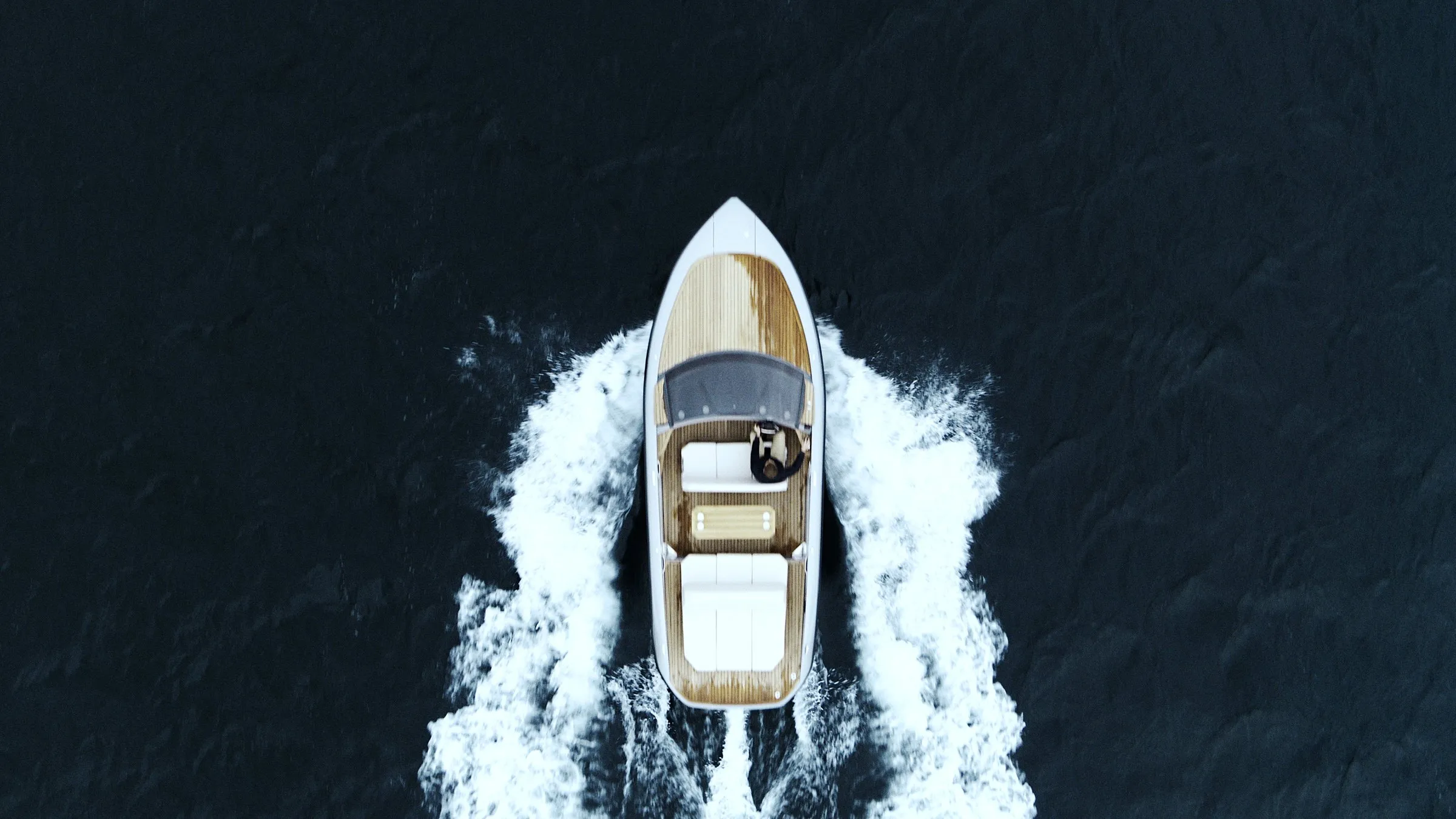
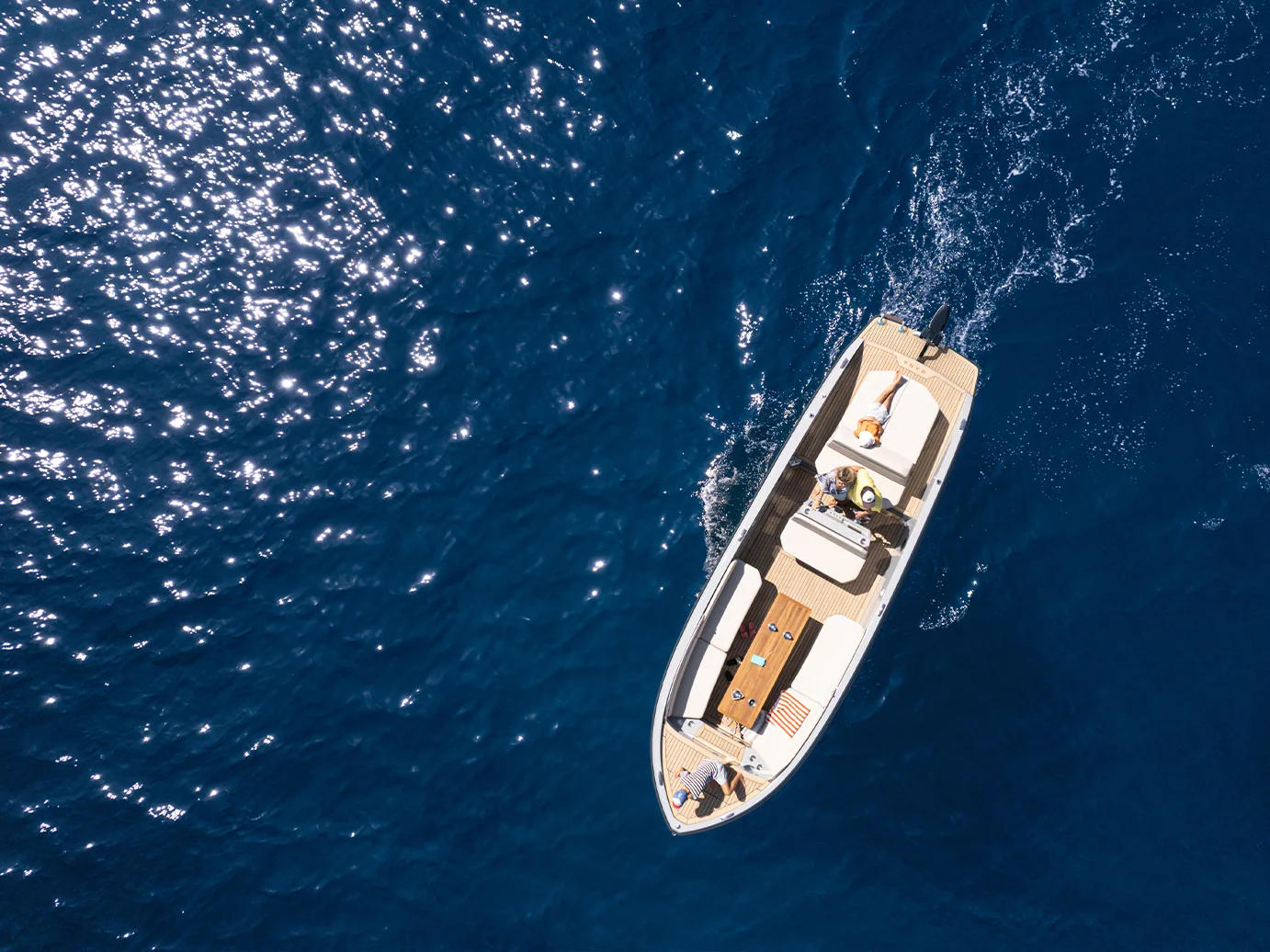
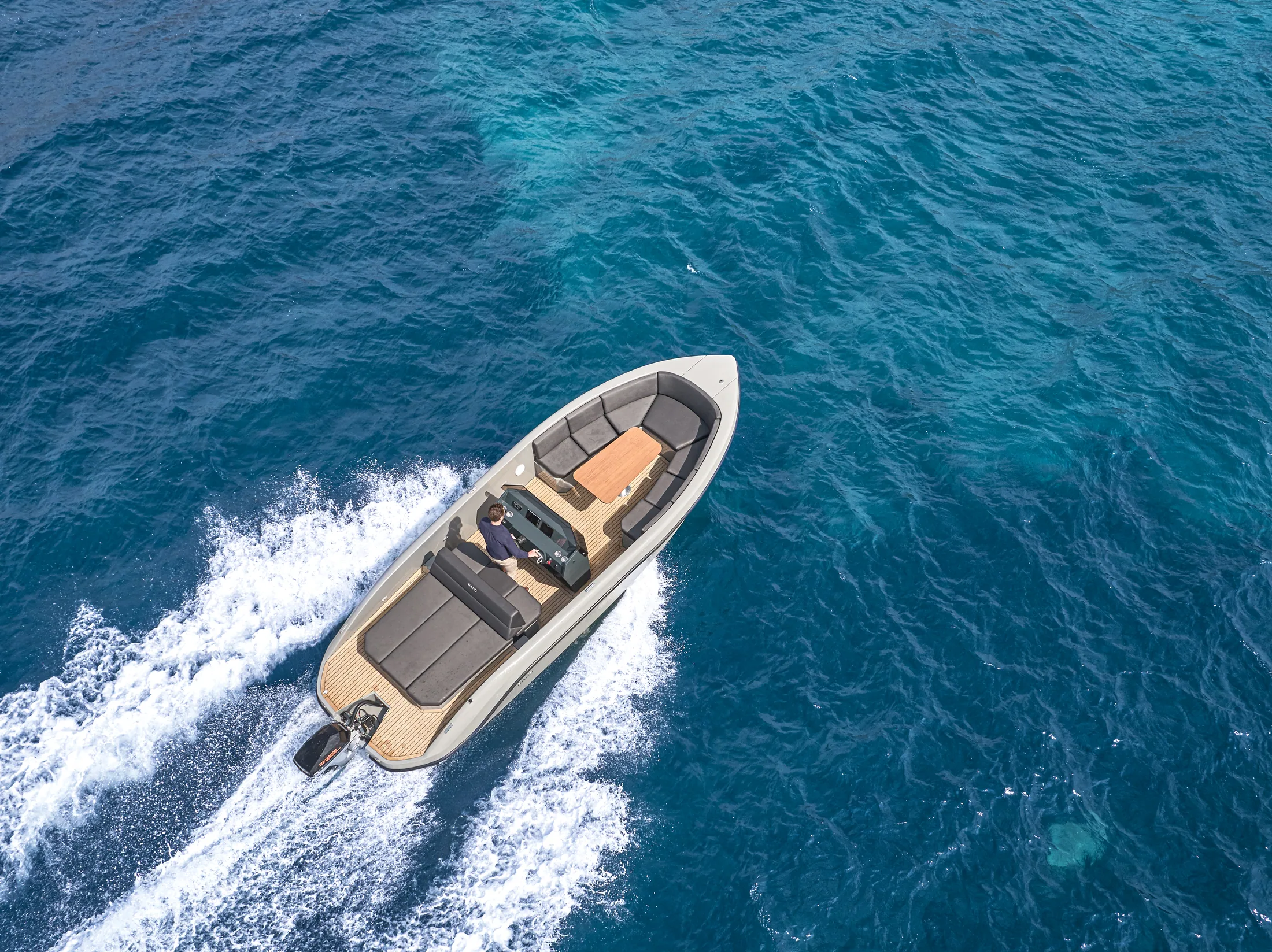
An electric RAND seen from directly above, its wake opening behind it

If we cannot name the job, the line goes.

Go deeper

The question we ask in every design review
Can we name the line's job?

Where it comes from
Poul Henningsen solved glare with geometry: his lamps are beautiful because they answer a measured problem. Kaare Klint measured the body before he designed a chair. Dieter Rams turned taste into principles a whole company could work by.
Principle 02

Pure lines, rich touch.

Discipline where the eye rests. Richness where the body touches.

Scandinavian design was never cold. Look at a Wegner chair or a Finn Juhl sofa: the outline is disciplined, but the place your hand falls is carved, warm and generous. We work the same way.

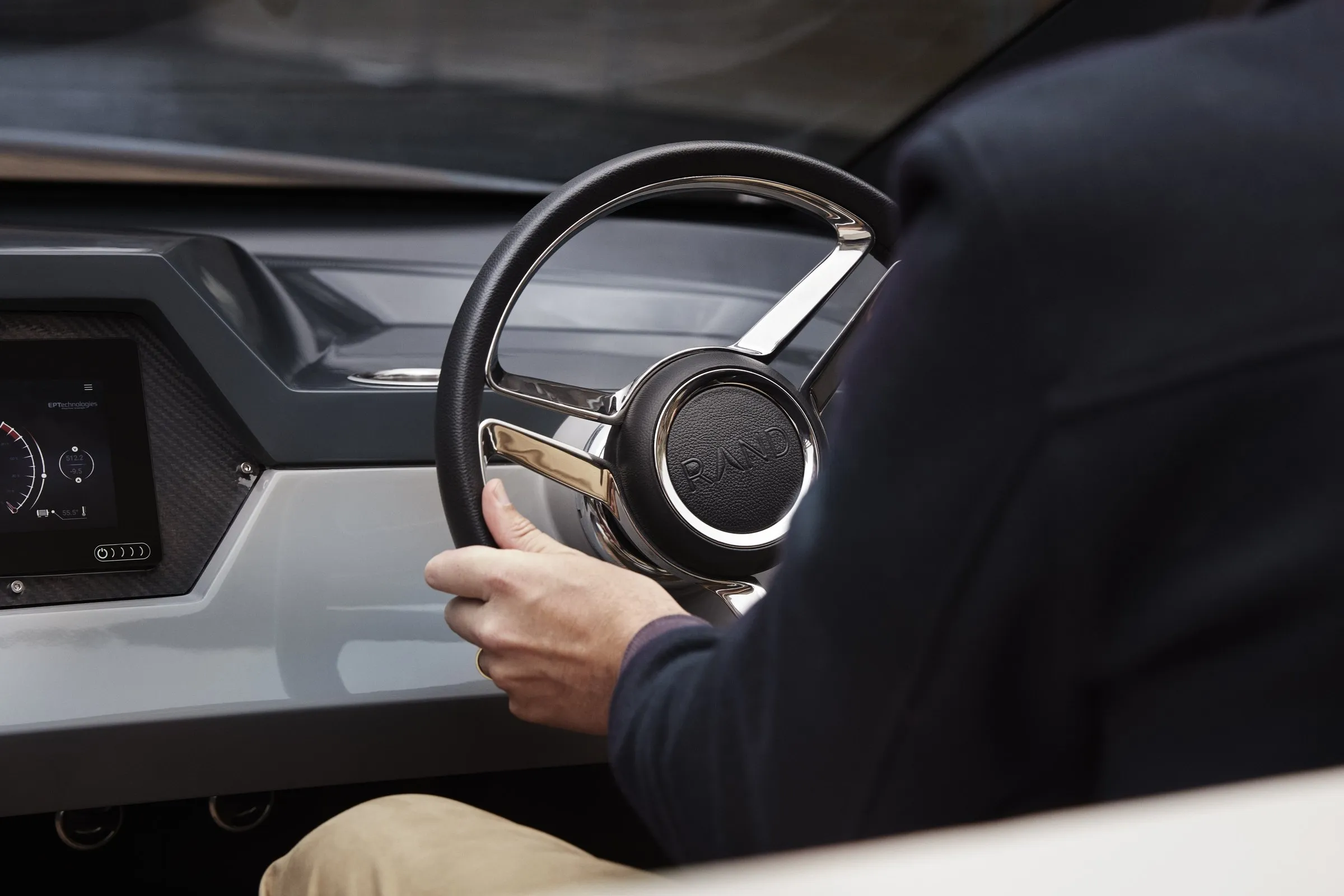
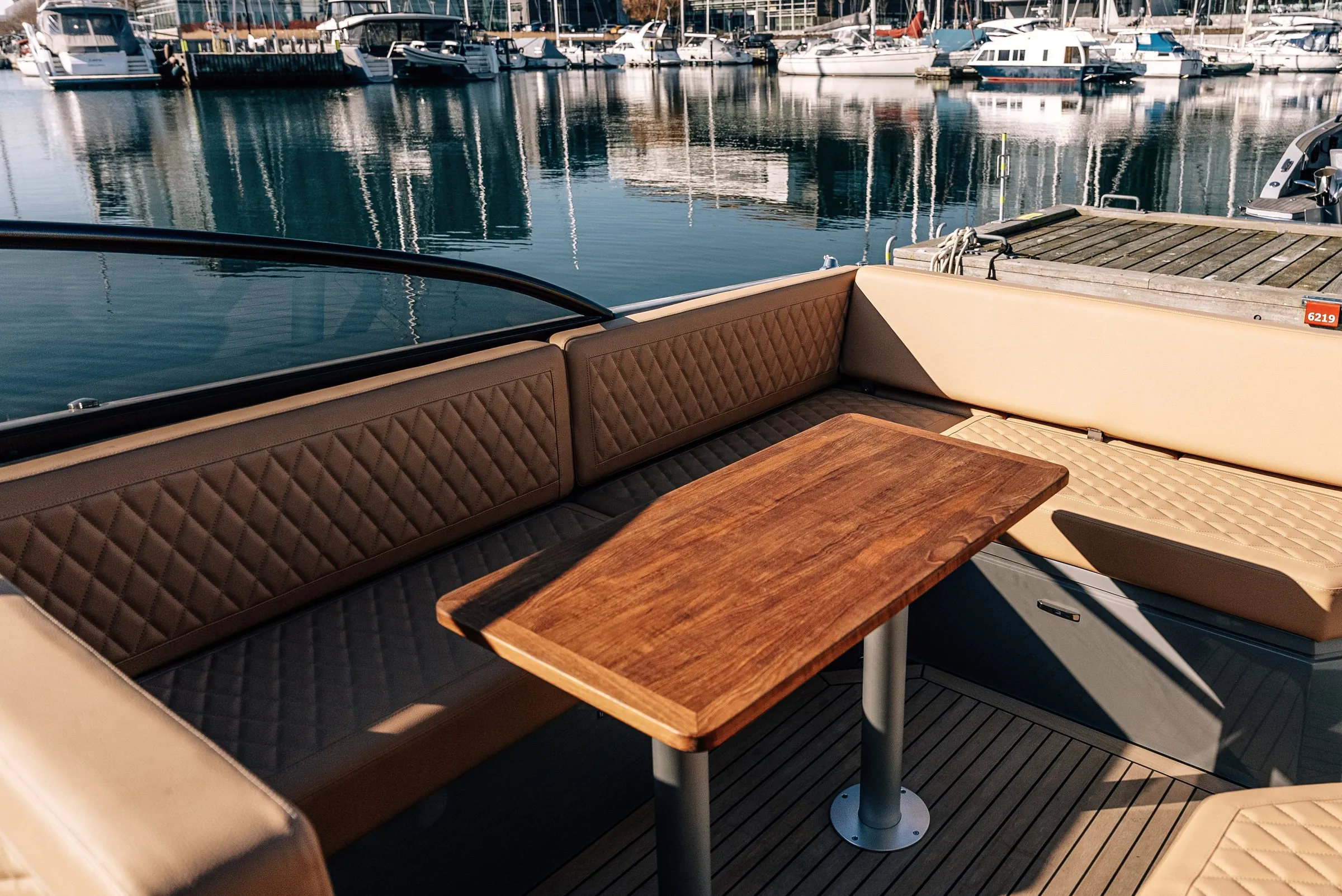
From a distance a RAND is a few clean planes. Up close, the materials gather where you meet the boat — stitched leather where you lean back, teak underfoot, a wheel that feels right in a wet hand. The best materials are spent where the body is, not where the brochure looks.

Diamond-stitched seating around the cockpit table of Supreme 27
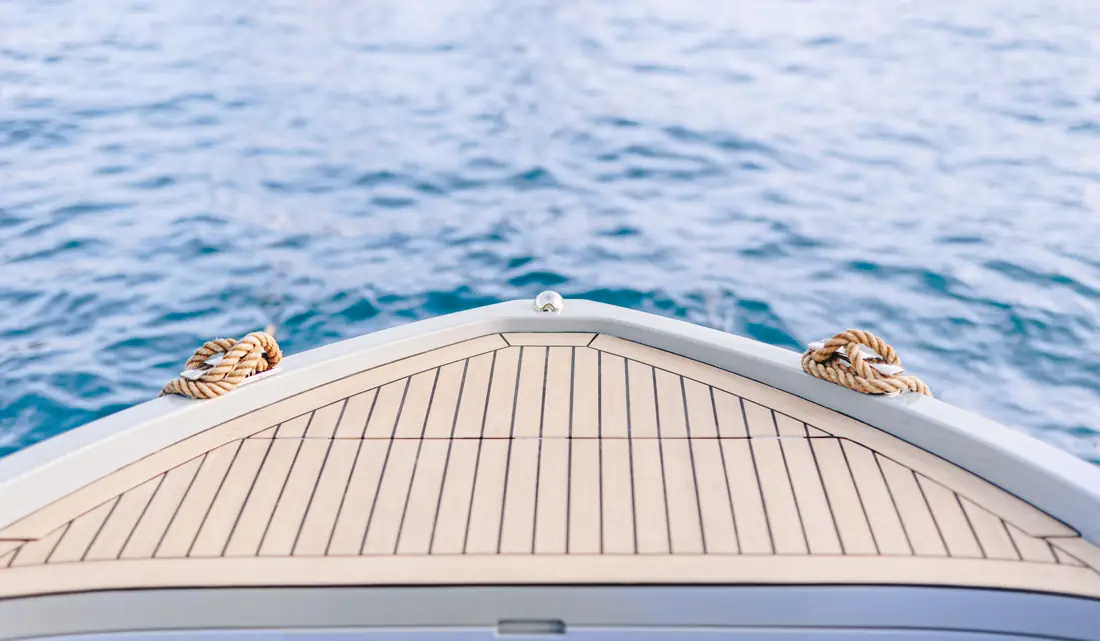
Teak foredeck
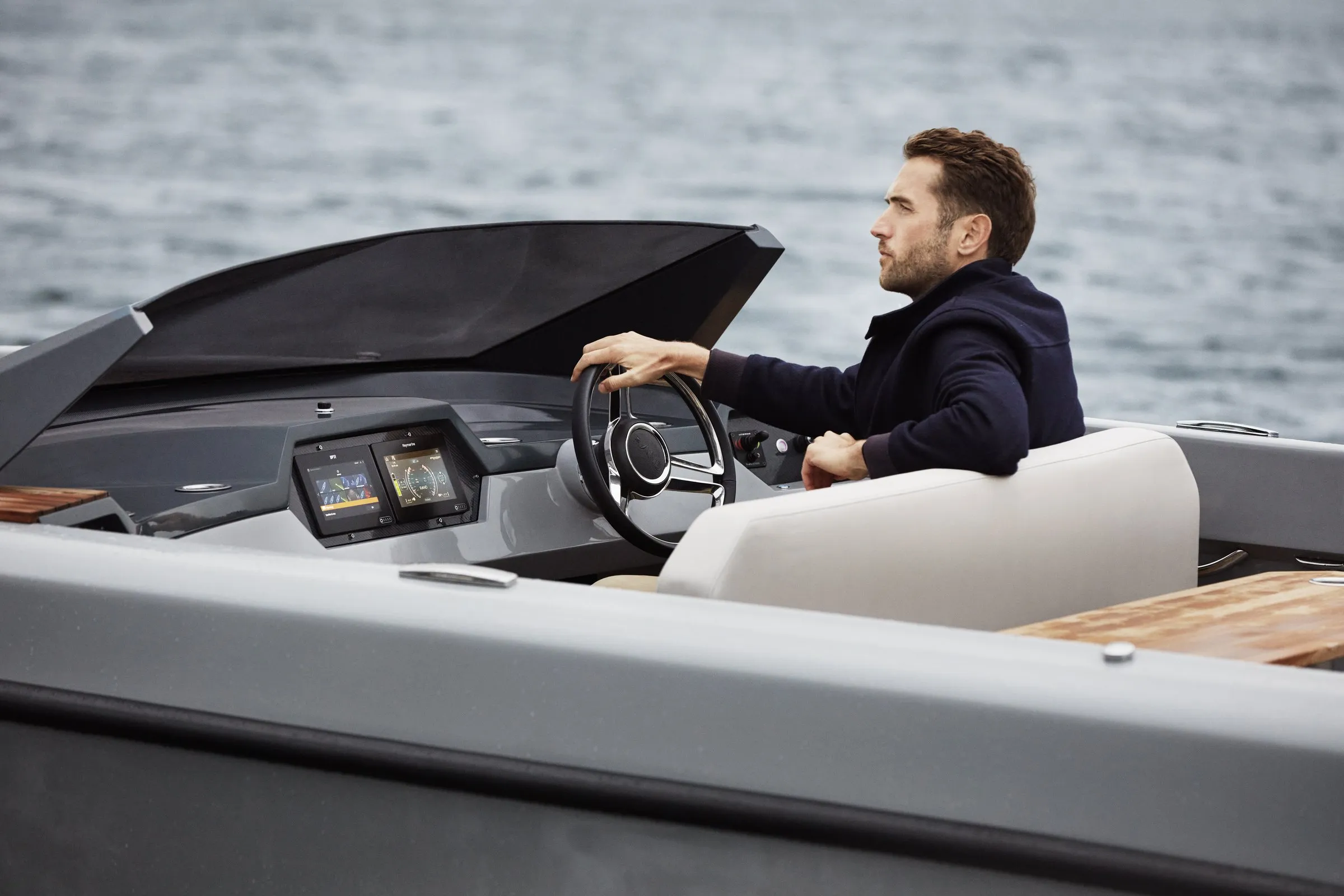
Hands on the wheel of an electric RAND

The best materials are spent where the body is.

Go deeper

The question we ask in every design review
Are the best materials where the hand is?

Where it comes from
Hans J. Wegner and Finn Juhl proved that Danish modernism could be sculptural, tactile and warm. Peter Zumthor builds atmosphere from material and light.

Principle 03

Designed around the people aboard.

The group, not the driver. The table at the centre.

Most boats are designed around the person at the helm and the engine behind them. Everyone else gets what is left over. We turn that around: the people you bring are the brief.

So the table comes first, and the seats face each other across it. The helm stays close enough that whoever steers is still part of the conversation. The swim platform and the bow are designed as places to gather, not just places to step. Our question in every review is simple — can everyone aboard see each other and talk, even underway?

A family gathered around the table aboard Serene 20

The people you bring are the brief.

Go deeper

The question we ask in every design review
Can everyone aboard see each other and talk — even underway?

Where it comes from
Arne Jacobsen designed the SAS Royal Hotel from the building down to the cutlery. Charles and Ray Eames treated details as the design itself.

Principle 04

Silence or roar — never noise.

Sound is designed: the stillness of an electric Serene or the voice of a tuned engine. Never rattle, never whine.

Sound is the most underrated material on a boat. It decides whether you can talk at cruising speed, whether a bay notices you arriving, whether the day feels relaxed or tiring.

An electric RAND lets you hear the water, the wind and each other. A combustion RAND should sound like it means it. What neither is allowed to do is rattle, buzz or whine. We treat sound as part of the design — not something to fix afterwards.

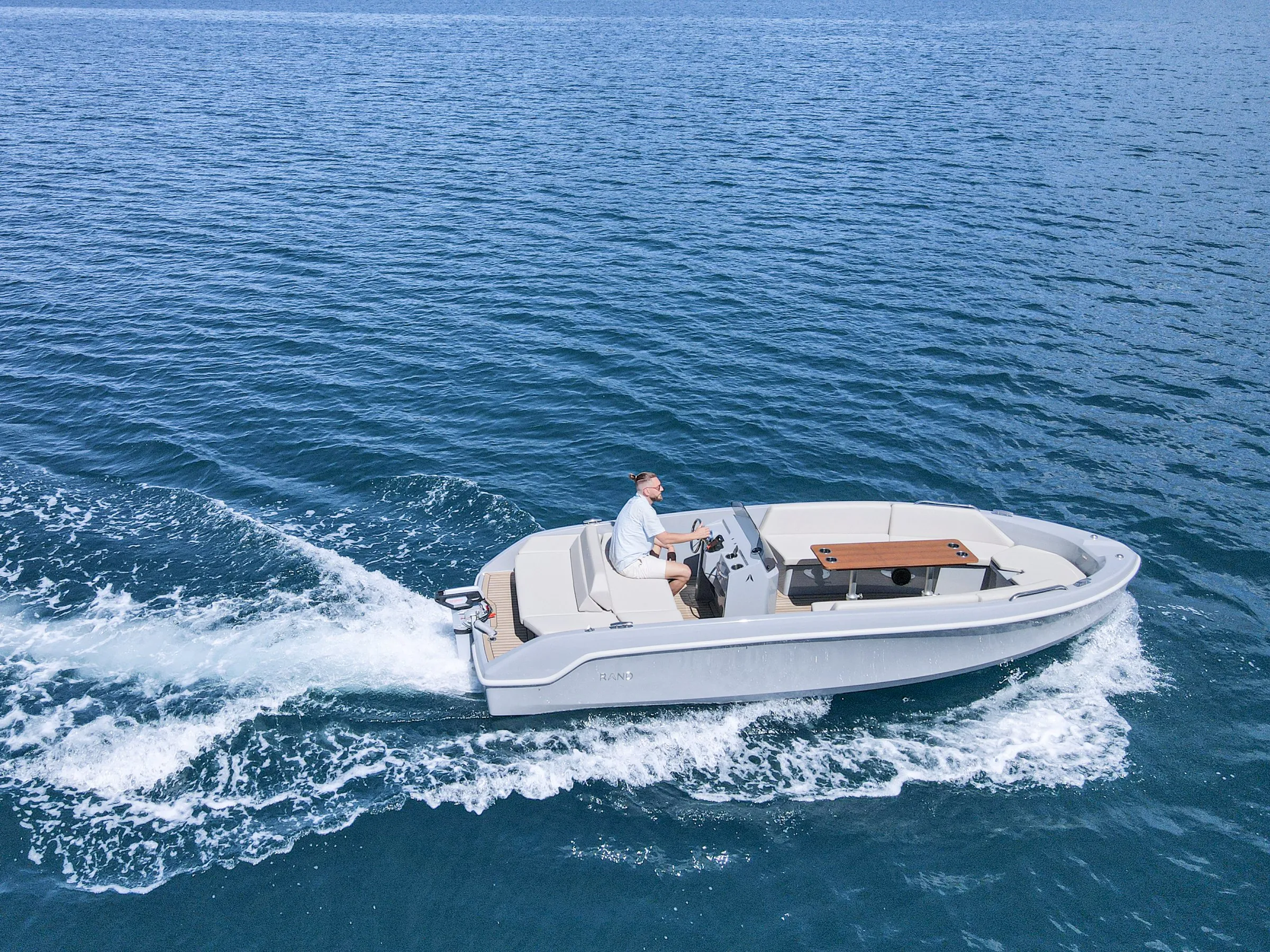
Serene 20 crossing open water under electric power

Sound is the most underrated material on a boat.

Go deeper

The question we ask in every design review
Does the model have a sound target?

Where it comes from
Peter Zumthor designs buildings for how they sound as much as how they look. Car makers spend years tuning an engine note — boats deserve the same care.

Principle 05

Touch before screen.

Everything that matters works by hand — with wet hands, against the sun, in a sea.

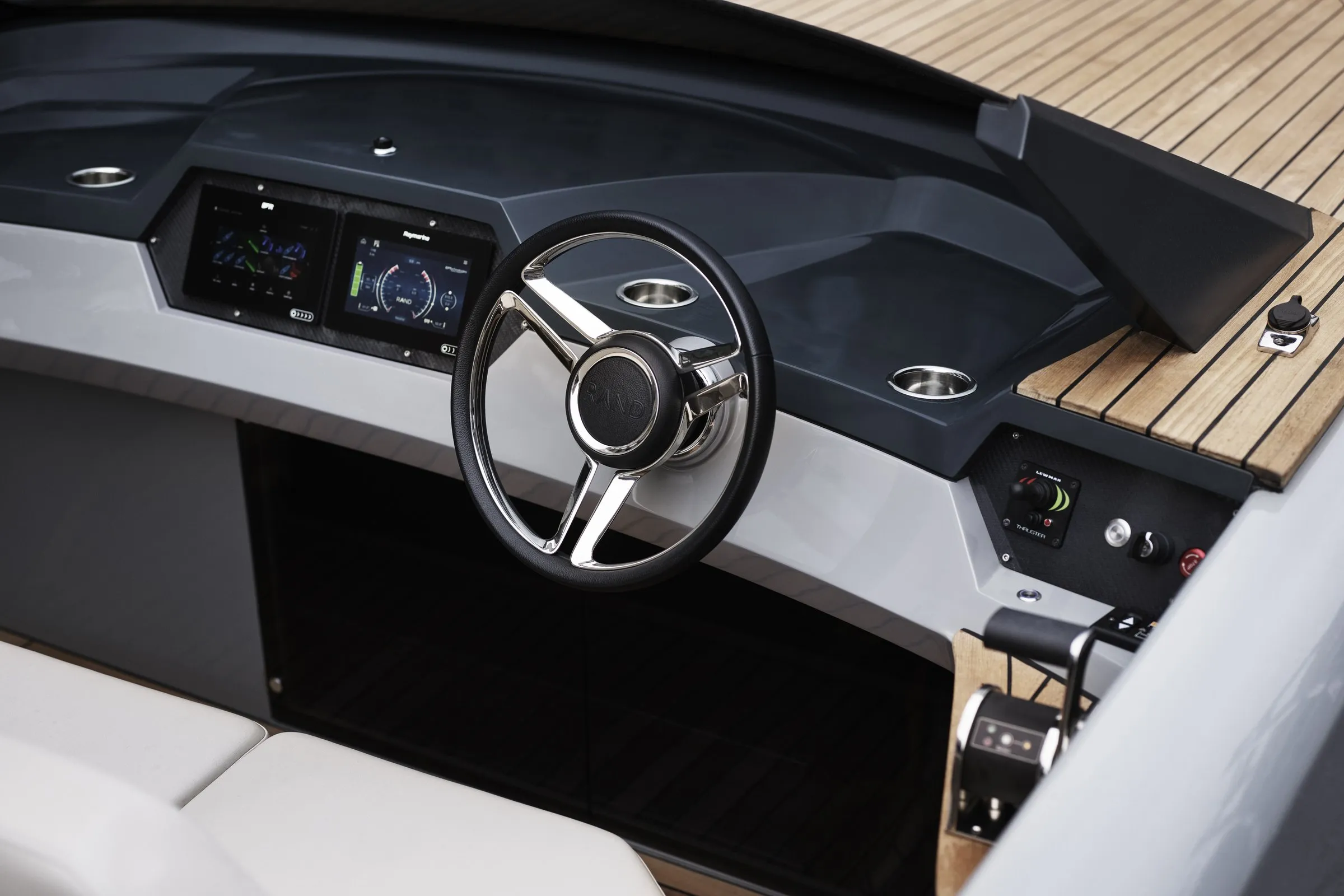
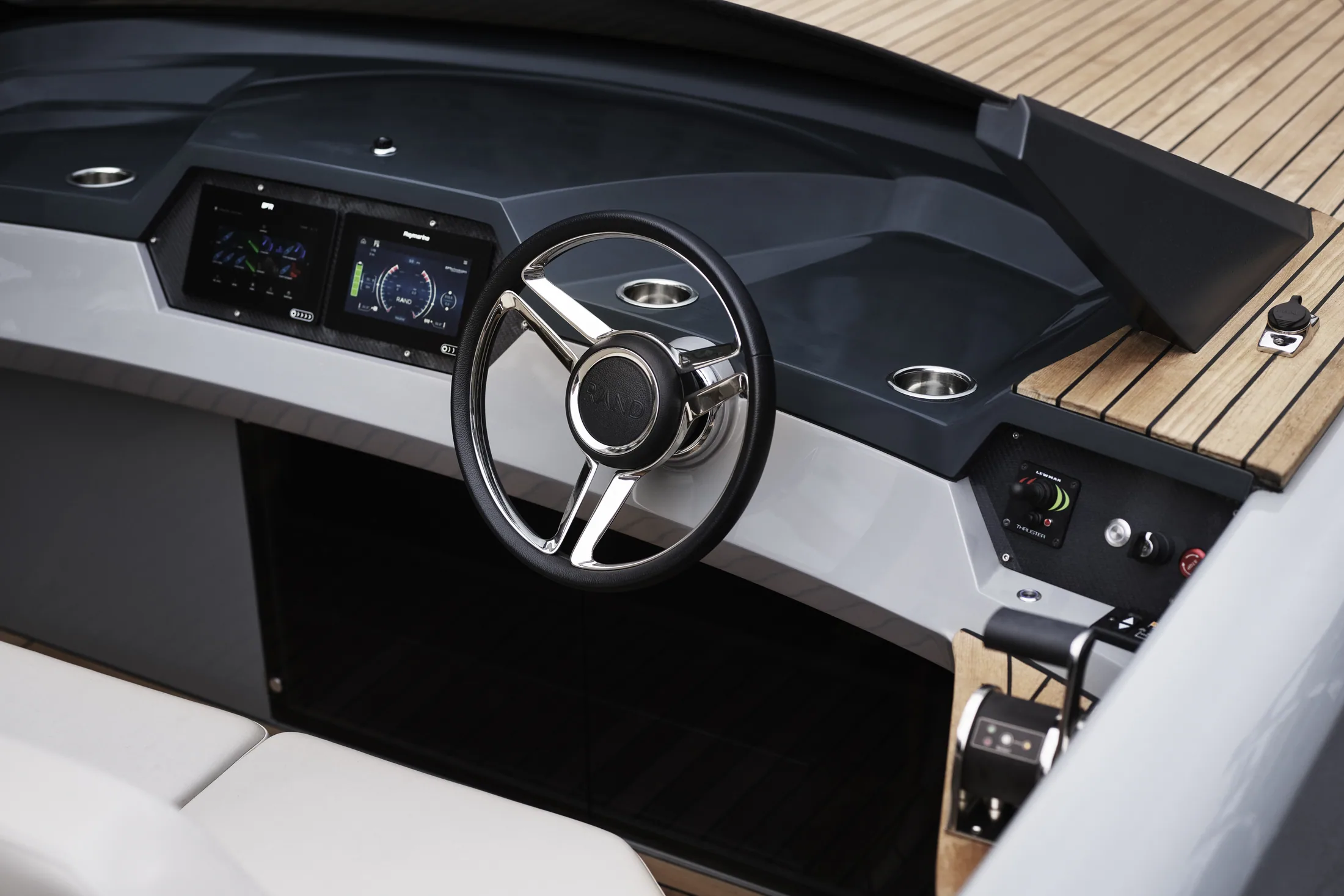
Screens are wonderful for charts and terrible in spray. On a RAND the things you need in the moment — throttle, steering, the switch for the anchor light — are physical, where your hand expects them, readable without looking.

The display informs; it never asks for attention. That is not nostalgia. It is what lets a new owner feel competent on the first day, and what keeps eyes on the water and the people instead of on a menu.

Helm and instruments of an electric RAND
Helm and instruments of GT 25

The display informs. It never asks for attention.

Go deeper

The question we ask in every design review
Can it be operated without looking?

Where it comes from
The best industrial design of the last decades — from Braun to LoveFrom — puts the hand before the interface.

Principle 06

One hand, one system.

Shared geometry, one hardware family and one signature across every series.

A silent Serene and a walkaround Escape are very different boats, but they should feel like they come from the same hand. They share proportions, the way surfaces meet, the hardware you touch and the small signature details that make a RAND recognisable before you read the name.

A system is also what lets a small studio do world-class work: once the language is right, every new model is a sentence in it rather than a new alphabet.

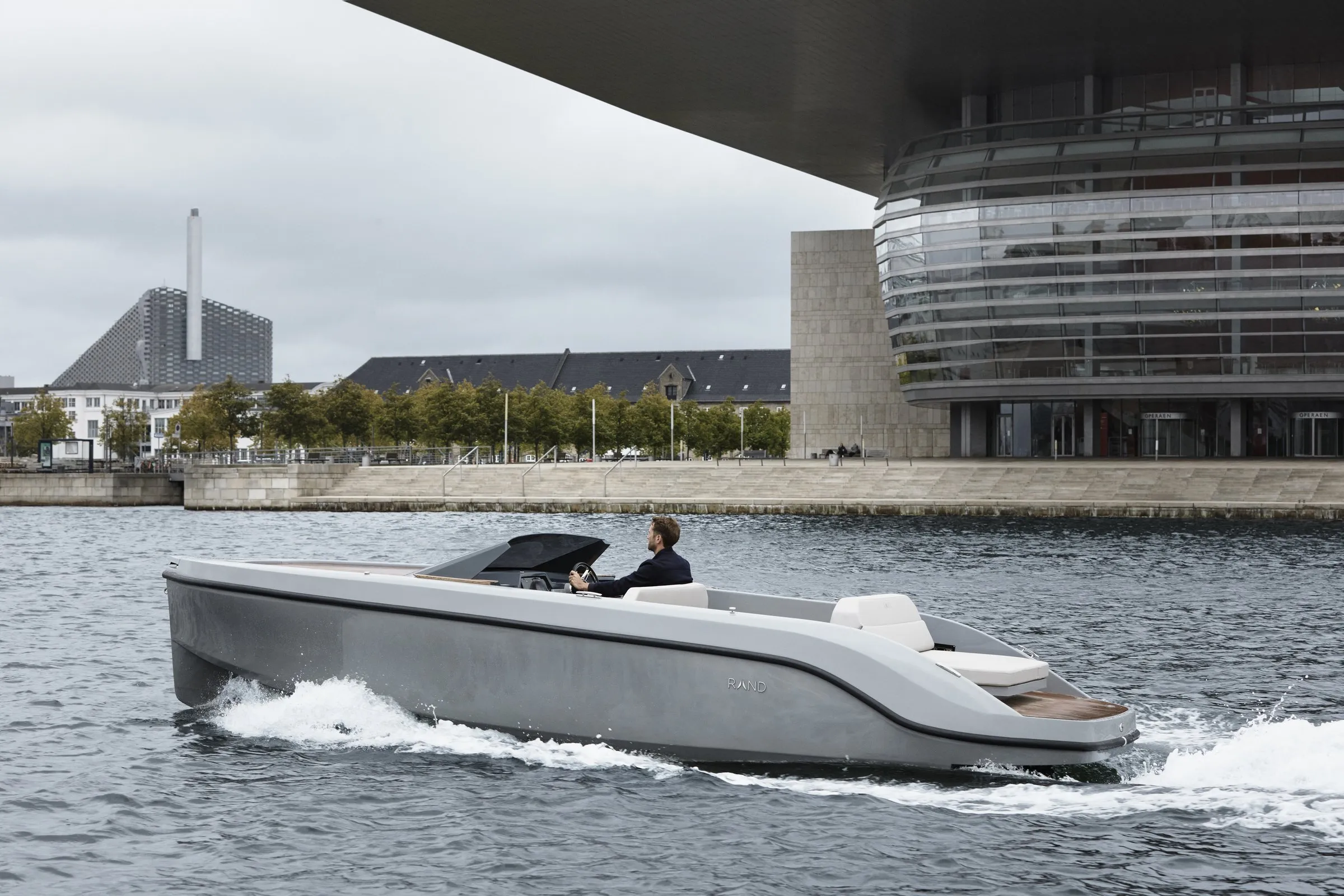
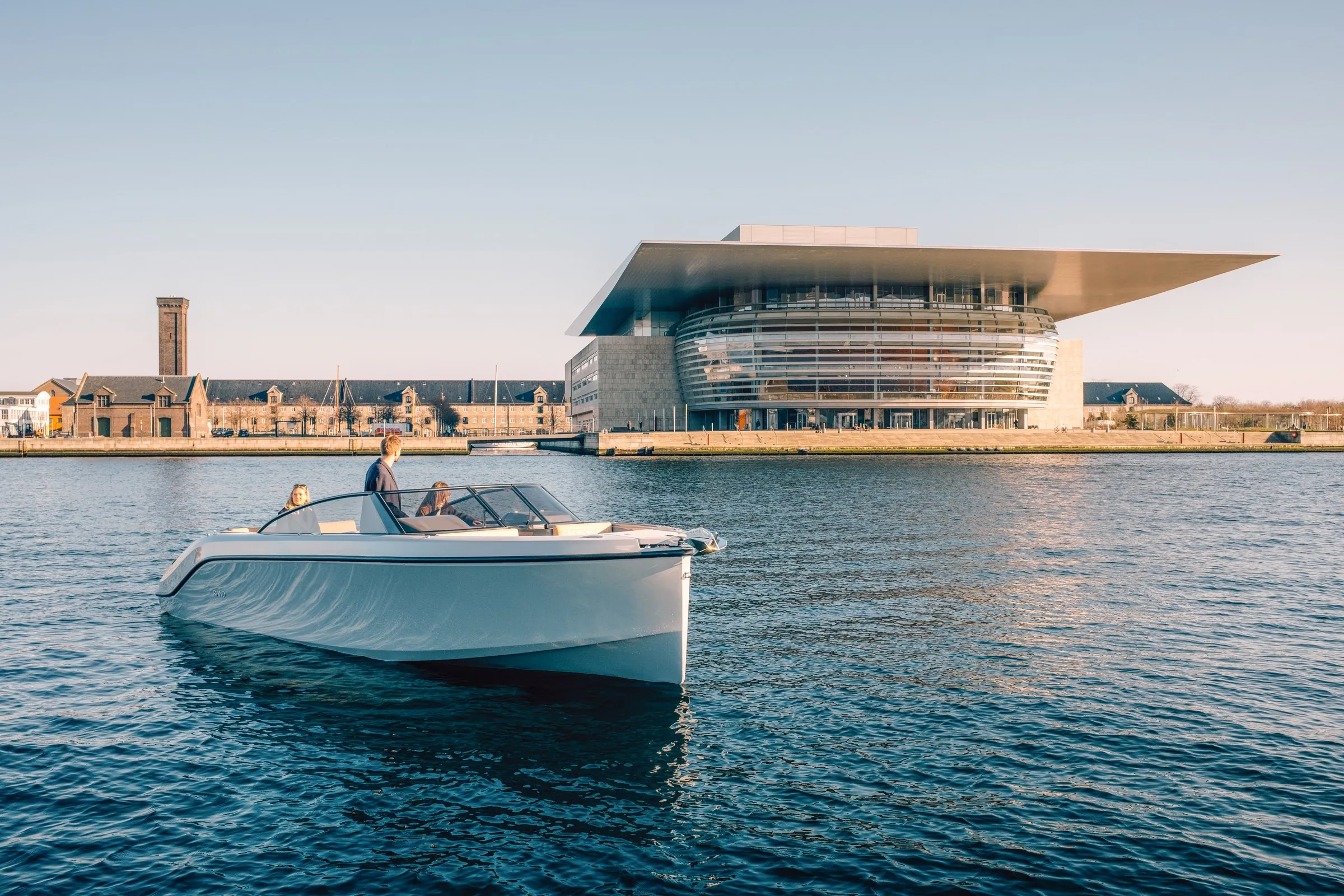
An electric RAND underway in Copenhagen harbour

Every new model is a sentence in the same language.

Go deeper

The question we ask in every design review
Would you recognise it as a RAND without the logo?

Where it comes from
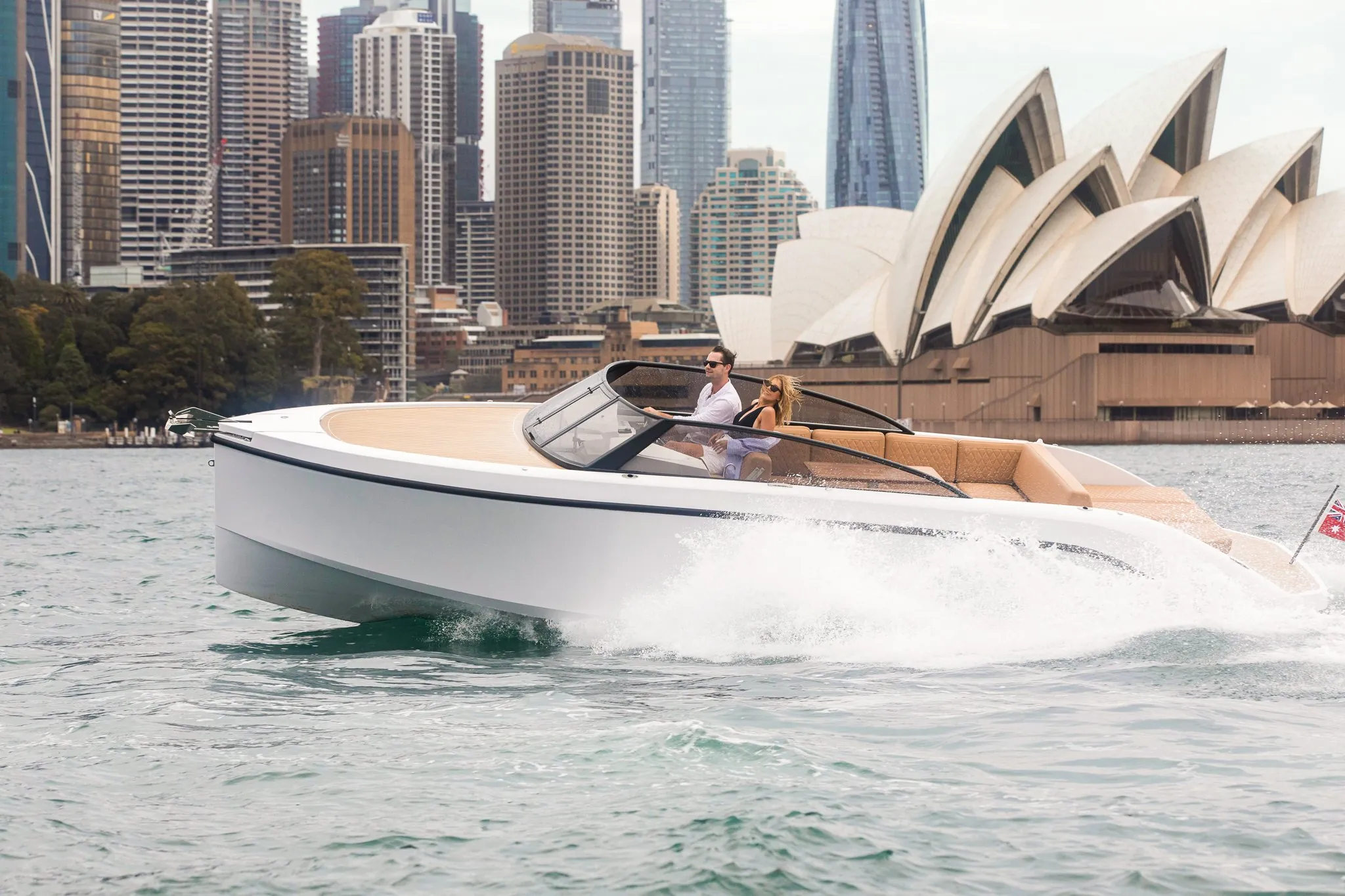
Jørn Utzon made the shells of the Sydney Opera House buildable by deriving all of them from one sphere — and he was the son of a naval architect. Porsche has refined one silhouette for sixty years.

Principle 07

Evolve by 3 %.

Icons are refined, never replaced.

We don't redesign for the sake of a new season. When a RAND changes, it is pushed forward a little — a better seat, a cleaner detail, a smarter layout — so that an owner looks at the new one and still recognises their own boat in it.

That protects something we care about: the value of the boats already on the water, and the feeling that you bought into a family, not a fashion.

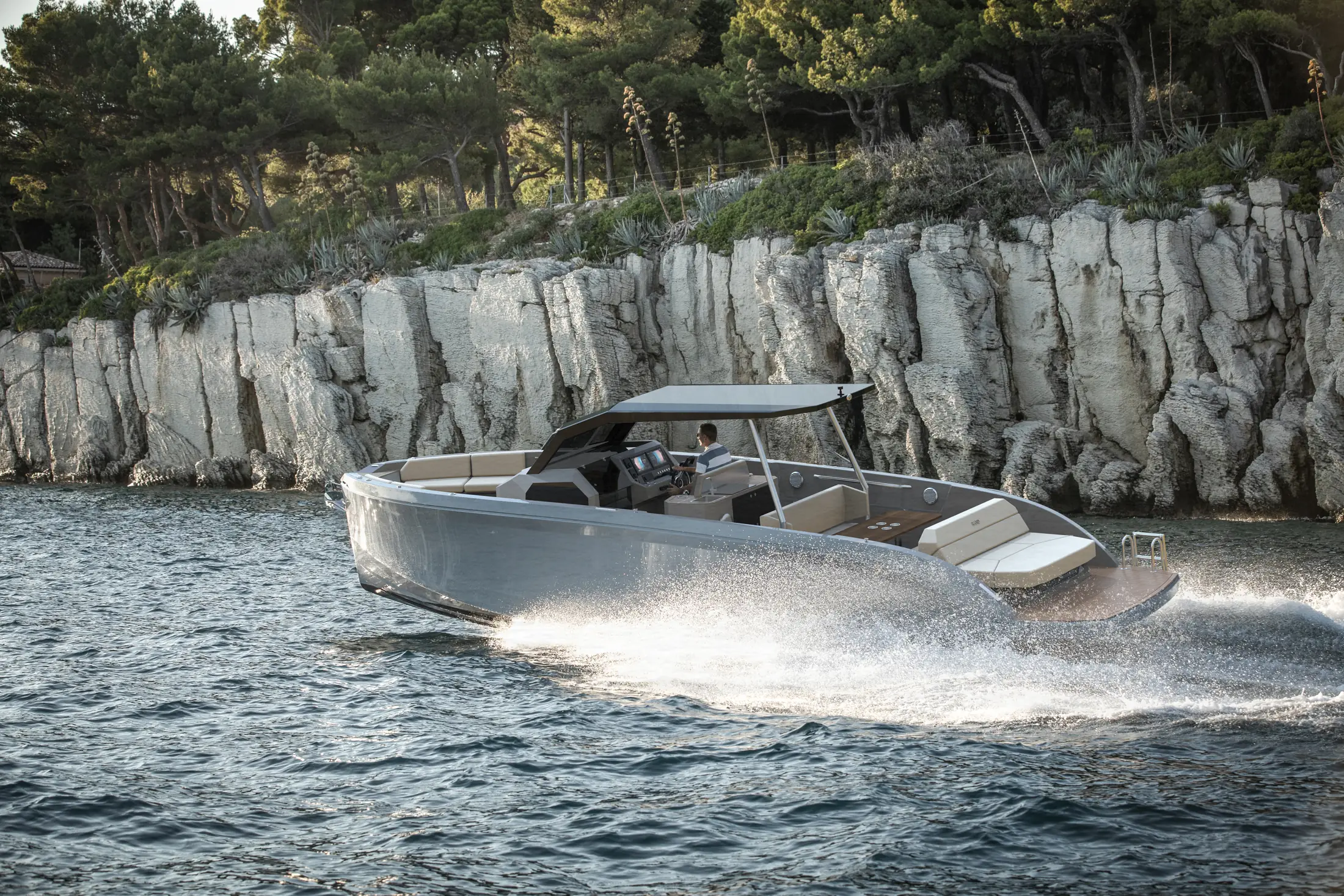
Escape 32 at speed below white limestone cliffs

Bought into a family, not a fashion.

Go deeper

The question we ask in every design review
Does an owner recognise their boat in the new one?

Where it comes from
Virgil Abloh's 3 % rule — change something by just enough to make it new. The Porsche 911 has evolved for decades without ever being replaced.

Principle 08

Built to be kept.

Durable, repairable, better with age. The second owner is designed in.

A RAND should be more beautiful after ten summers, not less. That means materials that gain patina instead of looking worn, parts that can be reached and replaced, and details that don't date.

It also means thinking about the boat's whole life — the first day, the hundredth, and the day it is handed on to someone new with its story intact.

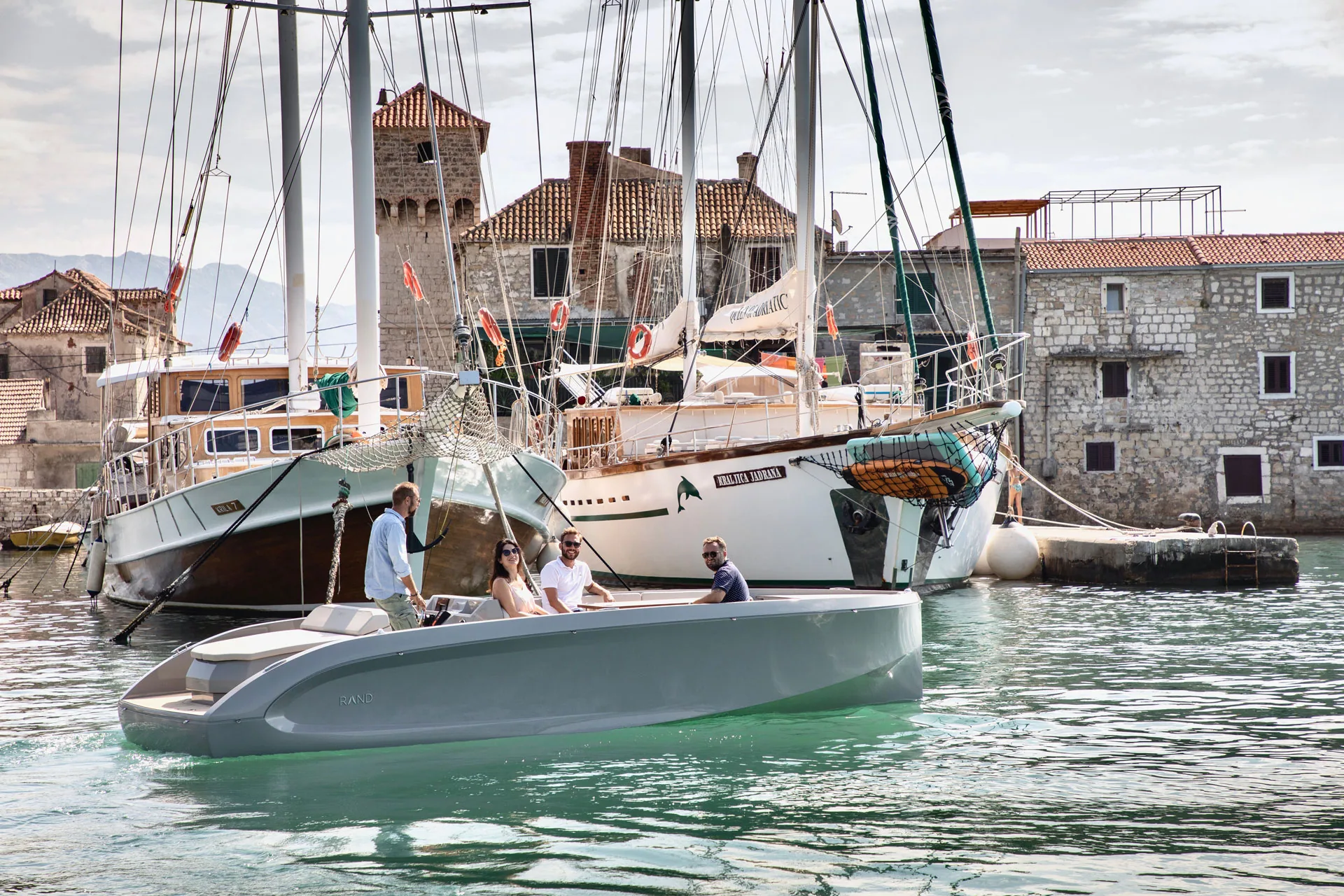
A RAND leaving a stone harbour among classic sailing ships

More beautiful after ten summers, not less.

Go deeper

The question we ask in every design review
Is it more beautiful after ten years?

Where it comes from
A Patek Philippe is famously never owned, only looked after for the next generation. Dieter Rams asked for design that is long-lasting.

What it is all for

Five things we design for.

Every decision in a design review has to serve at least one of them. If it serves none, it is decoration — and it goes.

Connection
Face to face. Conversation possible underway. The table at the centre.
Presence
Nothing demands attention. Screens inform; they never entertain.
Awe
Closeness to the water, framed views, low sightlines.
Mastery
A new owner feels capable on the first day. Controls that make sense by hand.
Memory
Rituals, patina, the logbook. A boat that is kept and handed on.
Carl Rand at the helm of an electric RAND
The designer

An architect's way of working.

RAND's founder, Carl Rand, trained as an architect and leads the design of every RAND. He comes to boats the way an architect comes to a house: from the people who will live in it, the light, the way you move through it — and only then the shell.

That is a Danish way of working. Klint measured the body, Wegner carved where the hand falls, Jacobsen designed the whole experience, Utzon learned from his father's boats. We are trying to bring that tradition onto the water — and keep it alive there.

Feel it for yourself

Design is easier to feel than to read about.